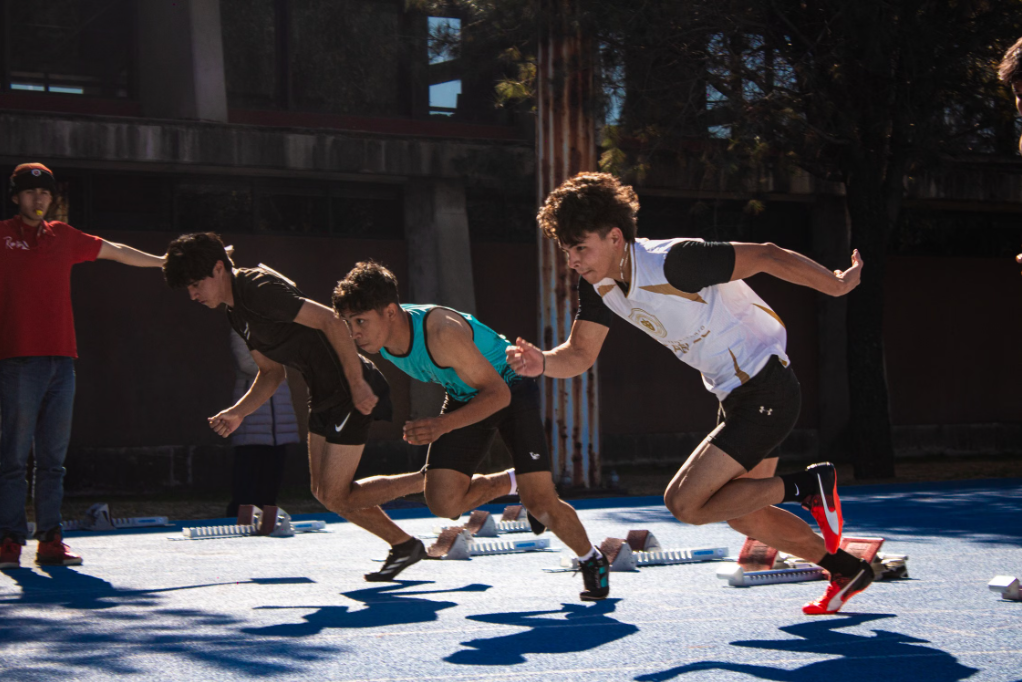
Most of us grew up believing athletes are born, not made. Some kids just have it, and the rest do their best. But that is not really how it works, especially in the youth years. Long before a child ever touches a barbell or specializes in a single sport, their body and brain are quietly learning the skills that decide how good an athlete they become. Understanding that window, and how to use it, is the difference between hoping your child is talented and actually helping them build it.
Why Talent Is Built, Not Just Born
The kids who look naturally gifted at fourteen are very often the ones who built a deep movement foundation years earlier, whether on purpose or by lucky accident. In the youth years, the nervous system is unusually good at learning how to move. Coordination, balance, rhythm, and reaction time are not fixed traits. They are skills, and skills can be trained. That is the good news for every parent whose kid loves their sport but was not handed elite genetics: the most important athletic abilities are teachable, and this is the window to teach them.
Training a young athlete the right way builds:
The movement patterns and body control that carry into every sport
Faster reaction time and sharper decision-making on the field
A foundation that makes later strength training safer and more effective
Real confidence, which grows from competence, not just from winning
A body that is more resilient and less prone to overuse injury
A genuine love of training, because progress feels good
What Training the Athlete First Actually Looks Like
Foundation-first training does not look like a scaled-down version of an adult workout. For young athletes, it looks a lot like guided play: sprinting, jumping, cutting, crawling, balancing, and reacting, all coached with intention. The goal at this stage is not to load a growing body with heavy weight. It is to teach that body how to move well, in every direction, under control. Get the movement right first, and everything that comes later, the speed, the strength, and the sport-specific skill, is built on solid ground instead of shaky habits. It is the difference between a house with a foundation and one without.
What "NeuroFitness" Really Means
Most training only works the muscles. The part that usually gets skipped is the one that matters most for a young athlete: the connection between the brain and the body. NeuroFitness is training that connection directly, the reaction time, coordination, and brain-body wiring that let an athlete move efficiently and read the game a step faster. It sounds technical, but to a parent it looks simple. A kid who reacts quicker, moves more smoothly, and seems a beat ahead of everyone else. The young brain is primed for exactly this kind of learning, which is why the foundation is best built early, before a body is loaded with heavy weight or locked into a single sport too soon. Build the athlete first, and the sport gets easier.
How Real Progress Gets Measured
One of the best parts of doing this the right way is that you do not have to guess whether it is working. Simple markers turn progress into something you can actually see: a short sprint, a vertical jump, a broad jump, an agility drill, and as athletes mature, the pro-agility shuttle and the 40. Capturing those numbers early gives you a starting point, and revisiting them over time shows real change. Those numbers are read with care, though, because young bodies grow and change and progress does not always move in a straight line. A good program treats measurement as a tool for encouragement and direction, not a scoreboard to stress over. Honest progress you can see beats big promises every time.
Here's How Development Should Progress at Each Age
Development is not one-size-fits-all. It follows a natural progression, and good training meets an athlete exactly where they are.
1. The Early Years: Learn to Move For younger kids, the priority is movement itself, coordination, balance, agility, and body control, often through play that does not even feel like training. This is the operating system every future skill runs on. Heavy lifting has no place here. Moving well does.
2. The Middle Years: Build the Athlete As kids grow, training sharpens speed, agility, change of direction, and the reaction-time work at the heart of NeuroFitness. This is where a well-built foundation starts to show, and where those first measurable markers start to climb.
3. As They Mature: Add Real Strength and Performance Once an athlete hits puberty and their body is ready, structured strength and sport-specific performance work enters the picture, measured with objective markers like pro-agility, vertical jump, and the 40. This is also where the years of foundation pay off, because a well-built athlete can handle real training safely and get more out of it.
Bringing It All Together
The science points to one clear conclusion. The best way to build a great athlete is not to push harder or specialize sooner. It is to build the foundation first, train the brain along with the body, and measure real progress as they grow. Do that, and you do not just get a better season. You get a better athlete for every season that follows.
That is exactly what we set out to build in North Liberty. Sports Lab is a new training home for local young athletes, founded by Michael Humpal, DC an Iowa native who took his own game from the wrestling mat to the Iowa Hawkeyes to the NFL, with day-to-day coaching led by an experienced Director of Performance. Foundation first. Brain and body together. Measured, honest progress. And a philosophy built to support the teams your athlete already plays for.
We open this August, right as the fall season gets underway, and founding spots for our first families are limited. If you want your athlete built the right way, join the founding waitlist through the link on our page, and let's build something that lasts.
