Youth speed training is one of the most misunderstood pieces of athletic development. Most kids practice their sport constantly. And still wonder why their speed isn't improving. The answer usually isn't more reps. It's foundational movement work that most sport-specific practice never addresses.
What Sport Practice Alone Can't Build
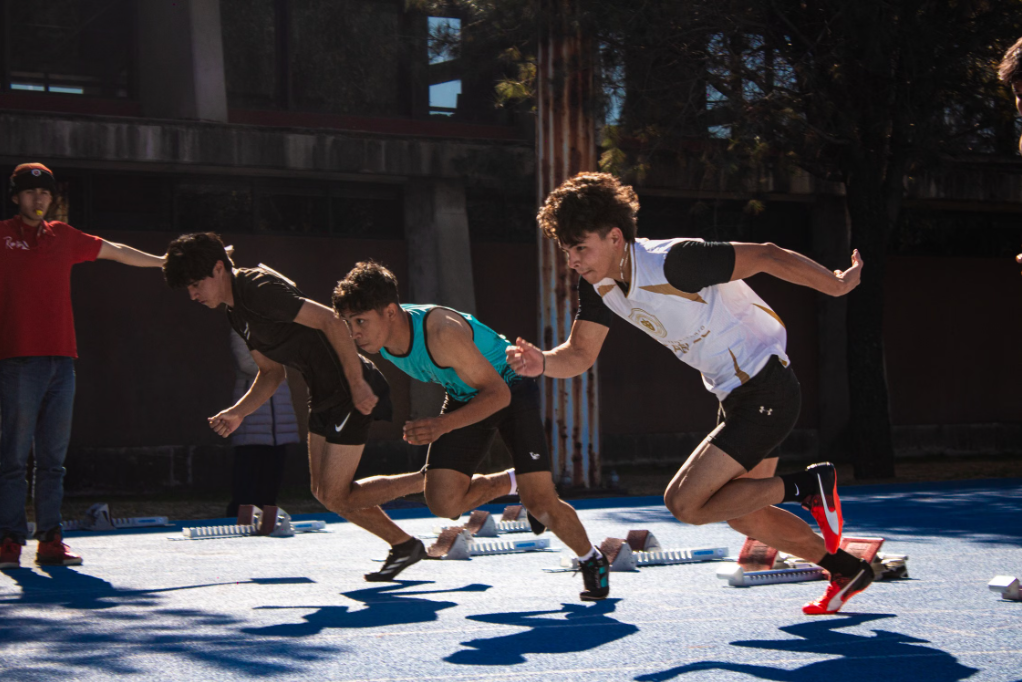
Repetition inside a sport gets anyone better at that sport. Baseball practice makes kids better at fielding and hitting. Soccer practice sharpens ball control and positioning. But neither of those sessions spends much time on how a kid accelerates from a dead stop, decelerates under control, or changes direction without losing momentum.
Those are separate skills. They're neurological skills. And they require their own training environment to develop.
Coaches at the school level are doing exactly what they're supposed to do: building team cohesion, running systems, developing sport-specific IQ. That work is irreplaceable. What it doesn't always include is the raw foundational movement training that sits underneath every sport. The coordination, the motor pattern precision, the brain-body timing that determines how fast a kid actually moves.
That gap is where a supplemental performance environment earns its place.
How Youth Athlete Speed Training Actually Works
Speed isn't a single thing. It's a collection of motor patterns that fire in sequence. Acceleration off the line, top-end stride mechanics, lateral quickness, reactive movement. Each one is trainable. Each one is also measurable.
At Sports Lab, the approach is grounded in what's sometimes called NeuroFitness: training that targets the neurological wiring underneath athletic movement. The idea is that the brain and body have to learn to communicate efficiently before raw physical output has anywhere to go. You can't build a fast kid on a disorganized foundation.
A training session built around this framework looks different from a standard conditioning drill. Kids work on movement quality first, then apply it under speed. Coaches watch for the specific compensations that slow kids down. The hip that drops, the arm swing that crosses the midline, the first step that goes in the wrong direction before self-correcting. Fixing those details produces measurable changes in how fast a kid moves.
That last part matters. Results shouldn't be a feeling. They should show up on a stopwatch, on a force plate, in a recorded movement pattern that you can compare over time.
Why the Prepubescent Window Matters for Motor Patterns
There's a reason the timing of foundational training matters. Before puberty, the nervous system is in a period of heightened adaptability. Motor patterns are being laid down at a rate that won't repeat itself later in development. What a kid learns to do with their body during this window. The coordination habits, the movement timing, the reflexive patterns. Tends to stick.
This isn't a reason to pressure youth into intense training. The prepubescent period is an opportunity to build movement quality in a low-stakes environment, before the physical demands of high school athletics arrive. Kids who enter those programs with clean foundational mechanics tend to adapt faster, stay healthier, and contribute earlier.
Youth who skip the foundational work and jump straight into high-intensity sport specialization often hit a ceiling. They're physically strong but movement-inefficient, and at that stage, inefficiency is hard to unlearn.
Starting early. With the right kind of training. Is the difference between building on a solid base and retrofitting one.
Measurement Is What Separates Training from Guessing
One of the most common complaints parents have about youth sports training is that they can't tell if it's working. Their kid seems to be doing stuff, the sessions are consistent, but there's no clear before-and-after picture.
Measurement fixes that. When you track a kid's 40-yard dash time, their lateral quickness splits, their reactive step patterns, you get an objective record of progress. We can show a parent exactly what changed and by how much. We can show the kid where they started and where they are now. That kind of concrete feedback does something that encouragement alone can't: it builds buy-in.
Kids who can see their improvement tend to train harder. Parents who see documented progress tend to stay enrolled. Coaches who receive those with documented baselines can plan around real data instead of impressions.
This is the standard Sports Lab holds itself to. We're not just saying it, but we can then measure it. It's the operating philosophy behind every session.
How Sports Lab Fits Into What Your Athlete Already Does
Sports Lab is not a replacement for your child's school athletic program. That point deserves to be said plainly, because it matters.
We're supportive and supplemental to the high school programs. The goal is to send kids back to their coaches faster, stronger, and more movement-efficient. Not to compete with the work those coaches are doing. School strength programs, varsity conditioning, sport-specific practice: all of that stays. Sports Lab adds a layer that most school settings don't have the time or structure to provide.
That layer is foundational speed and agility training, administered in a semi-private setting with professional measurement and a clinical background to support injury recovery and return-to-play when it's needed. The facility integrates chiropractic expertise with performance training under one roof, which means an athlete coming off an injury doesn't have to choose between recovery and staying sharp.
A community of kids who are moving better, performing better, and staying in the game longer because they built the right foundation early.
If your kid is heading into a fall season, September is a good time to establish a baseline. See where they are. Set a measurable target. Start the foundational work that will compound across every season ahead.
For more on the Sports Lab approach, visit humpalchiropractic.com/sportslab.